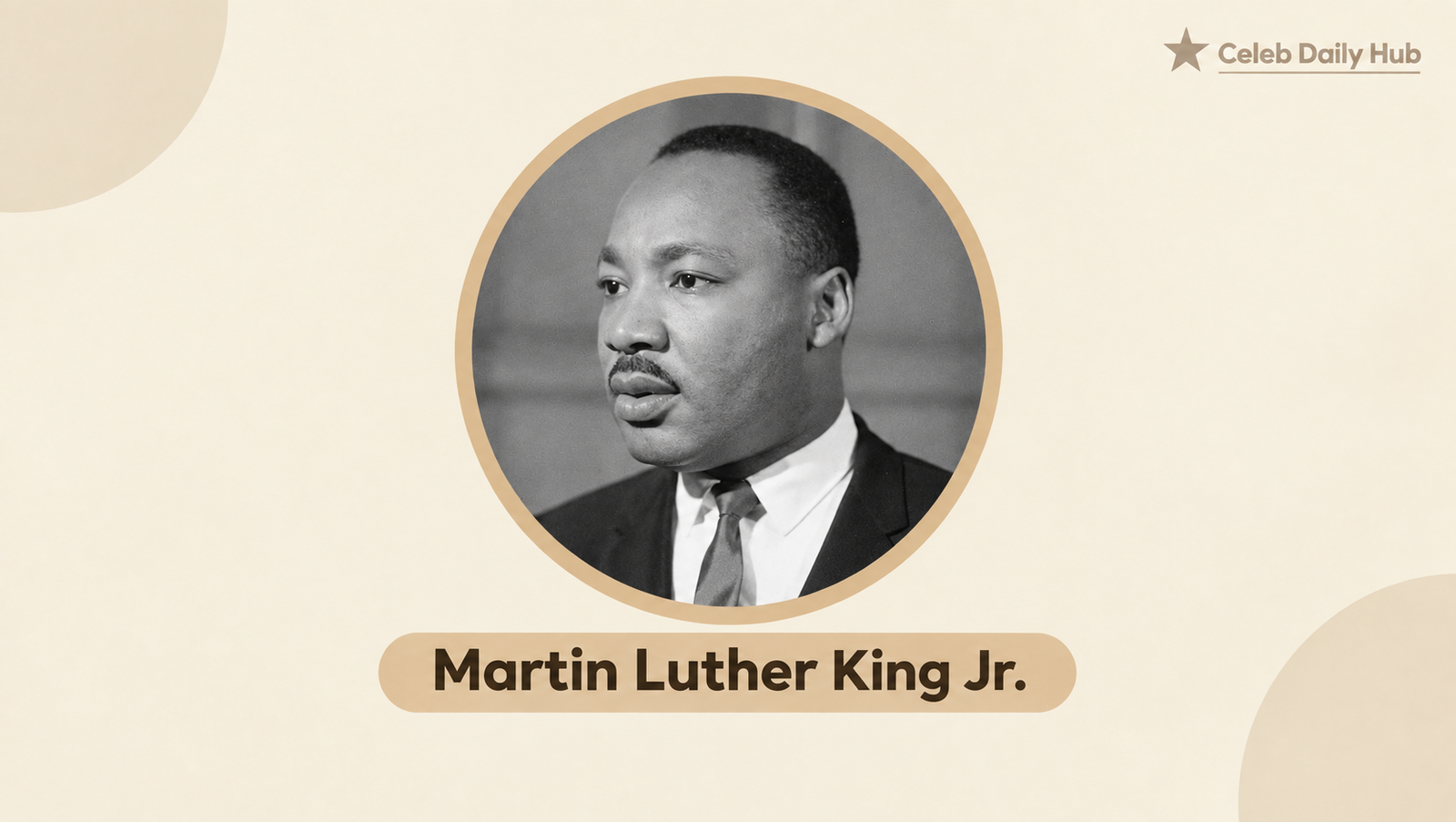
Martin Luther King Jr. was one of the most influential leaders of the American Civil Rights Movement. Through peaceful activism, powerful speeches, and determined leadership, he challenged racial segregation and discrimination in the United States. His work helped bring national attention to the struggle for racial equality and influenced important changes in American law and society.
This Martin Luther King Jr. biography explores his early life, family, education, civil rights activism, major achievements, famous speeches, and lasting legacy. It also provides a simple timeline and key facts that can help students, younger readers, and anyone interested in American history understand his life and work.
Who Was Martin Luther King Jr.?
Martin Luther King Jr. was an American Baptist minister and civil rights leader who became a central figure in the fight against racial segregation. He believed that social change could be achieved through organized, peaceful resistance rather than violence.
King became nationally recognized during the Montgomery Bus Boycott in the 1950s. Over the following years, he participated in campaigns and demonstrations across the United States, including the Birmingham Campaign and the March on Washington.
His leadership combined religious ideas, nonviolent protest, public speaking, and community organization. His efforts eventually contributed to a broader movement for civil and voting rights.
Martin Luther King Jr. Early Life and Childhood
Martin Luther King Jr. was born on January 15, 1929, in Atlanta, Georgia. He grew up in a religious family and was surrounded by the traditions of the Black church from an early age.
His father, Martin Luther King Sr., was a Baptist minister, while his mother, Alberta Williams King, was active in church and community life. King also had siblings, and his family environment played an important role in shaping his understanding of faith, responsibility, and racial inequality.
Where Was Martin Luther King Jr. Born?
King was born in Atlanta, Georgia, a city where racial segregation was part of everyday life during his childhood. Black Americans faced restrictions and discrimination in education, employment, transportation, housing, and many other areas.
Growing up in this environment helped King recognize the injustice of segregation. His family also encouraged education and religious development, giving him a strong foundation for his later public leadership.
Martin Luther King Jr. Family and Parents
King’s parents were Martin Luther King Sr. and Alberta Williams King. His father was an influential pastor, and the family was closely connected to Atlanta’s Black religious community.
The family emphasized education, faith, dignity, and service. These values became visible throughout King’s later career.
Martin Luther King Jr. Childhood
King experienced racial discrimination from a young age. Like many Black children living under segregation, he saw significant differences between the opportunities available to Black and white Americans.
Those experiences did not lead him toward violence. Instead, his religious upbringing and later education helped him develop a philosophy centered on justice, equality, and peaceful resistance.
Martin Luther King Jr. Education
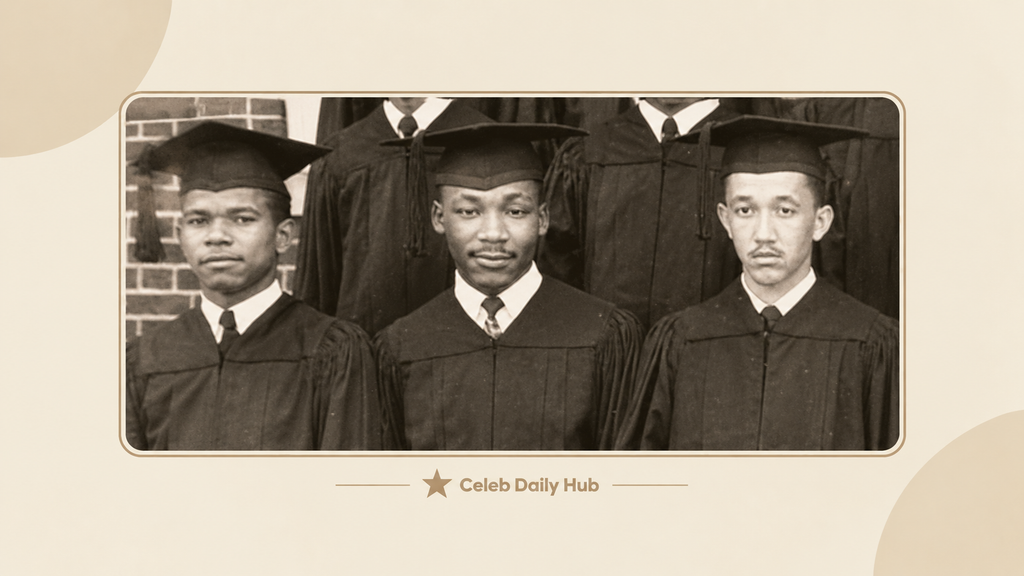
Education was a major part of King’s development as a leader. He was academically talented and advanced through school at a relatively young age.
He attended Morehouse College in Atlanta, where he studied sociology and developed a deeper understanding of social problems and inequality. He later attended Crozer Theological Seminary in Pennsylvania.
King eventually earned a doctorate in systematic theology from Boston University. His academic development exposed him to religious philosophy, social thought, and ideas about justice that influenced his approach to civil rights activism.
Religious Education and Doctorate
King’s religious education became particularly important to his leadership style. He viewed the struggle for equality not simply as a political issue but also as a moral one.
His studies introduced him to different religious thinkers and philosophical ideas. These influences helped him connect Christian teachings about love and justice with organized nonviolent resistance.
Beginning of His Civil Rights Activism
King became increasingly involved in the Civil Rights Movement after entering the ministry. His first major national leadership opportunity came in Montgomery, Alabama.
In 1955, Rosa Parks was arrested after refusing to give up her seat to a white passenger on a segregated bus. Her arrest helped trigger the Montgomery Bus Boycott, during which Black residents organized a prolonged refusal to use the city’s segregated buses.
King, then a relatively young minister, emerged as one of the boycott’s leaders.
Montgomery Bus Boycott
The Montgomery Bus Boycott lasted more than a year and became a major turning point in the Civil Rights Movement.
King encouraged participants to remain organized and peaceful despite pressure and opposition. The boycott demonstrated the power of coordinated community action and brought national attention to segregation in Montgomery.
The campaign eventually contributed to a legal decision ending bus segregation in Montgomery.
The experience also established King as a prominent national civil rights leader.
Southern Christian Leadership Conference
In 1957, King and other civil rights leaders helped establish the Southern Christian Leadership Conference, commonly known as the SCLC.
The organization promoted nonviolent resistance and coordinated campaigns against racial segregation. King became its first president and used the organization to support civil rights campaigns in communities across the South.
The SCLC became an important part of King’s leadership and helped connect local struggles into a broader movement.
Birmingham Campaign
The Birmingham Campaign of 1963 was another important stage in King’s civil rights career.
Birmingham, Alabama, was known for severe racial segregation and conflict. Activists organized demonstrations against discriminatory practices, and the campaign attracted national attention because of the response from local authorities.
King was arrested during the campaign. While imprisoned, he wrote the well-known “Letter from Birmingham Jail,” explaining why nonviolent direct action was necessary when unjust systems refused to change.
The Birmingham demonstrations helped increase public pressure for federal civil rights legislation.
March on Washington
On August 28, 1963, King participated in the March on Washington for Jobs and Freedom.
Hundreds of thousands of people gathered in Washington, D.C., to call for civil and economic rights. King delivered the speech that became known as “I Have a Dream.”
The event became one of the most recognizable moments of the American Civil Rights Movement.
Martin Luther King Jr. Famous “I Have a Dream” Speech
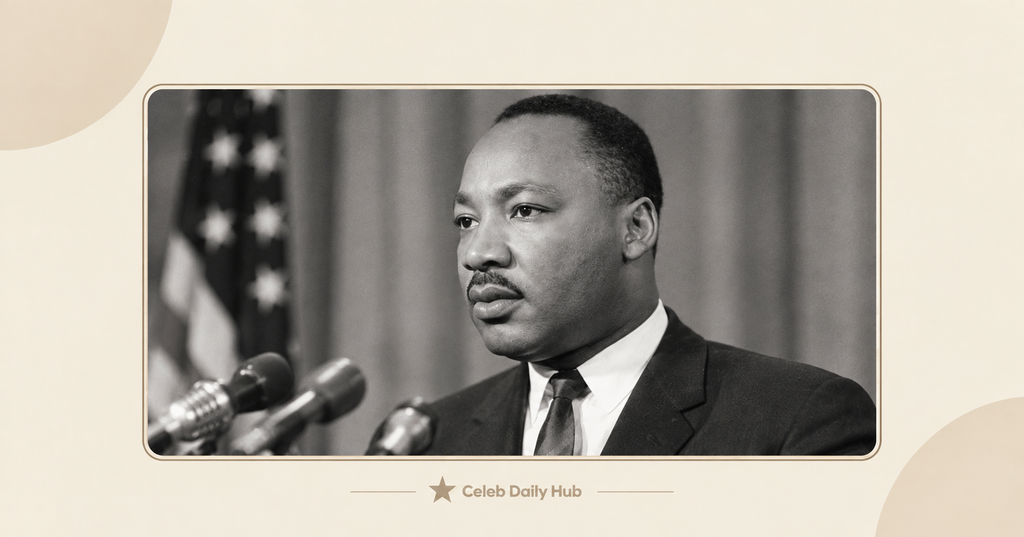
King’s “I Have a Dream” speech was delivered from the steps of the Lincoln Memorial during the March on Washington.
The speech expressed his hope for a United States in which people would be judged by their character rather than by race. Its message connected racial equality with the broader American ideals of freedom and justice.
The speech became one of the most influential pieces of American political oratory. Its impact extended beyond the Civil Rights Movement and continues to influence discussions about equality.
Martin Luther King Jr. Major Achievements
The Martin Luther King Jr. biography achievements section is especially important because his influence cannot be understood through a single protest or speech.
His major accomplishments included helping lead the Montgomery Bus Boycott, establishing the SCLC, organizing and supporting nonviolent demonstrations, participating in the March on Washington, and advocating for civil and voting rights.
Nobel Peace Prize
In 1964, King received the Nobel Peace Prize for his commitment to combating racial inequality through nonviolent resistance.
He became one of the youngest recipients of the prize at that time. He donated the prize money to organizations supporting the civil rights struggle.
The award gave international recognition to the American Civil Rights Movement and highlighted the importance of King’s nonviolent approach.
Contributions to the Civil Rights Movement
King helped turn nonviolent protest into a powerful method for challenging segregation and discrimination.
His campaigns relied on marches, boycotts, demonstrations, speeches, community organizing, and peaceful civil disobedience. These methods placed pressure on institutions while drawing public attention to racial injustice.
His activism formed part of a much larger movement that included many leaders, organizations, activists, students, workers, and ordinary citizens.
Civil Rights Act
King’s activism contributed to the growing national pressure that surrounded civil rights legislation.
The Civil Rights Act of 1964 prohibited discrimination in several important areas of American life and represented a major legal development in the struggle against segregation.
King did not accomplish this change alone. The legislation resulted from years of activism and advocacy by a broad civil rights movement, together with political action at the federal level.
Voting Rights Movement
King also supported efforts to protect voting rights for Black Americans.
The campaign in Selma, Alabama, became especially important. Demonstrators faced violent opposition while demanding equal access to voting.
The national attention surrounding Selma helped strengthen support for federal voting-rights protections. The Voting Rights Act of 1965 became another major milestone in the movement.
Martin Luther King Jr. Timeline
A Martin Luther King Jr. biography timeline makes the major stages of his life easier to understand.
- 1929: Martin Luther King Jr. is born in Atlanta, Georgia.
- 1940s: He develops academically and begins his higher education.
- 1948: He graduates from Morehouse College.
- 1951: He graduates from Crozer Theological Seminary.
- 1955: He receives his doctorate from Boston University and becomes involved in the Montgomery Bus Boycott.
- 1957: The Southern Christian Leadership Conference is established, with King as its first president.
- 1963: King plays a major role in the Birmingham Campaign and the March on Washington.
- 1964: He receives the Nobel Peace Prize, while the Civil Rights Act becomes law.
- 1965: The Selma voting-rights campaign becomes a major national event, followed by the Voting Rights Act.
- 1968: King is assassinated in Memphis, Tennessee.
- Later years: His work becomes an enduring part of American history and civil rights education.
Martin Luther King Jr. Key Facts
Here are several Martin Luther King Jr. biography key facts for quick reference:
- He was born on January 15, 1929.
- His birthplace was Atlanta, Georgia.
- He became a Baptist minister.
- He earned a doctorate in systematic theology.
- He became a major leader of the Civil Rights Movement.
- He helped lead the Montgomery Bus Boycott.
- He helped establish the Southern Christian Leadership Conference.
- He delivered the famous “I Have a Dream” speech in 1963.
- He received the Nobel Peace Prize in 1964.
- He supported campaigns for both civil rights and voting rights.
- He was assassinated in Memphis, Tennessee, in 1968.
- His legacy continues to influence discussions about equality and peaceful social change.
Martin Luther King Jr. Biography for Kids and Students
A Martin Luther King Jr. biography for kids can be understood through a few simple ideas.
King was a leader who wanted people to be treated equally regardless of race. He believed that unfair laws and practices should be challenged through peaceful action.
As a minister, he used religious ideas about love, justice, and human dignity to guide his activism. He helped organize peaceful protests and encouraged people to stand against segregation without responding to violence with violence.
For students, his life demonstrates how leadership can involve courage, organization, communication, and persistence. It also shows that major historical changes are usually achieved through the combined efforts of many people rather than one individual.
A Simple Lesson From His Life
One of the most important lessons from King’s life is that peaceful action can still be powerful.
He faced arrests, threats, criticism, and opposition, but continued advocating for racial equality. His approach demonstrated the importance of persistence and organized community action.
Martin Luther King Jr. Leadership Style
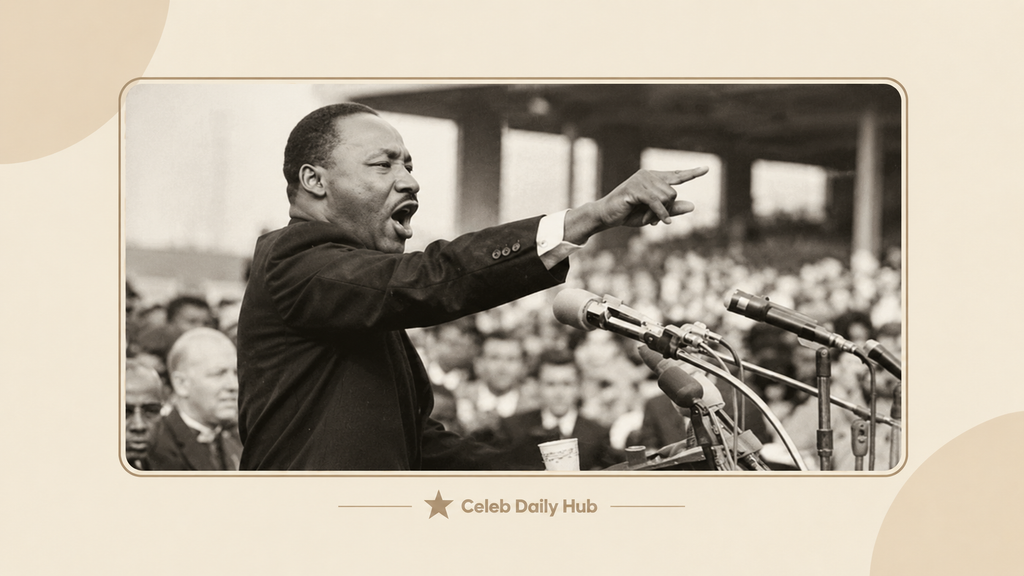
King’s leadership style was based heavily on nonviolence, public communication, moral persuasion, and collective action.
Rather than presenting the civil rights struggle as a fight between individuals, he often framed it as a broader question of justice and equality.
His speeches helped motivate people, while organizations such as the SCLC provided structures through which campaigns could be organized.
Martin Luther King Jr. Nonviolent Philosophy
Nonviolence was central to King’s activism.
He believed that peaceful resistance could expose injustice without creating another cycle of violence. Protests, boycotts, marches, sit-ins, and civil disobedience became important tools in campaigns associated with the movement.
King’s philosophy was influenced by Christian teachings as well as ideas associated with other thinkers and activists.
Martin Luther King Jr. and Mahatma Gandhi
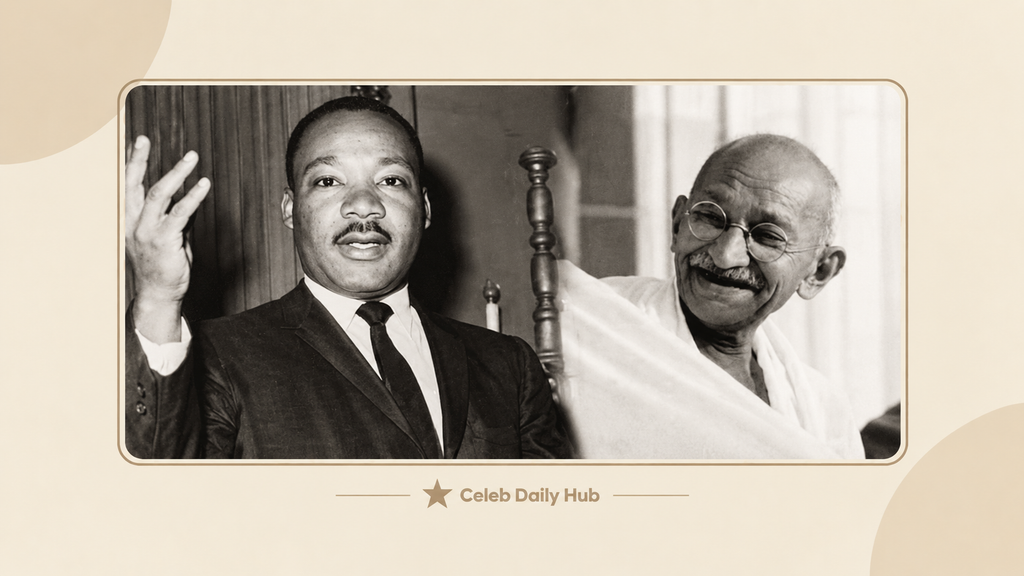
Mahatma Gandhi was an important influence on King’s understanding of nonviolent resistance.
King studied the methods associated with Gandhi’s campaigns against British rule in India. He saw similarities between Gandhi’s use of nonviolent resistance and the struggle for racial justice in the United States.
However, King’s activism developed within the specific historical, religious, political, and social circumstances of America.
Major Challenges and Opposition
King’s activism was not without serious opposition.
He was arrested multiple times, received threats, and faced hostility from individuals and groups opposed to the Civil Rights Movement. Activists working alongside him also faced violence and intimidation.
These challenges demonstrated the risks associated with challenging deeply established systems of racial discrimination.
Despite those difficulties, King continued advocating for peaceful social change.
Martin Luther King Jr. Legacy and Impact
King’s legacy extends far beyond the campaigns in which he participated.
His work became closely associated with the broader struggle for racial equality in the United States. His speeches and writings remain widely studied in schools and universities, while his approach to nonviolent activism continues to influence movements around the world.
His legacy also reflects the contributions of the many people who participated in the Civil Rights Movement. King became its most recognizable public figures, but the movement depended on countless organizers, activists, students, religious leaders, workers, and communities.
Martin Luther King Jr. Day
Martin Luther King Jr. Day is a federal holiday in the United States honoring King’s life and contributions.
The holiday provides an opportunity to reflect on civil rights, equality, community service, and the continuing importance of challenging discrimination.
For many students and families, it is also a time to learn about the history of the Civil Rights Movement and the people who contributed to it.
Martin Luther King Jr. Biography Summary
This Martin Luther King Jr. biography summary shows how his early experiences, education, religious beliefs, and leadership combined to shape his role in American history.
King grew up in a segregated society and became a Baptist minister before emerging as a major civil rights leader. He helped lead the Montgomery Bus Boycott, became president of the SCLC, participated in major campaigns such as Birmingham and Selma, and delivered the “I Have a Dream” speech during the March on Washington.
His commitment to nonviolent activism earned him the Nobel Peace Prize in 1964. Although he was assassinated in 1968, his ideas about equality, justice, and peaceful resistance continued to influence generations.
Frequently Asked Questions About Martin Luther King Jr.
When was Martin Luther King Jr. born?
Martin Luther King Jr. was born on January 15, 1929, in Atlanta, Georgia.
What was Martin Luther King Jr. known for?
He was best known for his leadership in the American Civil Rights Movement and his advocacy of nonviolent resistance against racial segregation and discrimination.
What were Martin Luther King Jr.’s major achievements?
His major achievements included helping lead the Montgomery Bus Boycott, leading the SCLC, participating in major civil rights campaigns, delivering the “I Have a Dream” speech, and receiving the Nobel Peace Prize.
Why is Martin Luther King Jr. important today?
King remains important because his work helped advance the struggle for racial equality and demonstrated the influence of organized, peaceful activism. His speeches and ideas continue to be studied as part of American history.
What is the main lesson from his life?
A central lesson from King’s life is the importance of standing against injustice through courage, peaceful action, persistence, and collective effort.
Final Thoughts
The life of Martin Luther King Jr. remains an important chapter in American history. His childhood experiences, education, religious beliefs, leadership, and commitment to nonviolence shaped a movement that challenged racial discrimination and contributed to significant legal and social change.
His story is especially valuable for students because it demonstrates how ideas, organization, courage, and peaceful action can influence society. At the same time, his legacy should be understood within the wider Civil Rights Movement and the contributions of the many people who worked alongside him.

Muhammad Haris is an SEO enthusiast, digital marketer, and website developer passionate about SEO, content creation, and growing online businesses. He enjoys sharing useful, well-researched information and developing digital projects.